From strong leadership to people’s participation, a new resolve is taking shape across Jammu and Kashmir. . If society chooses to stand firm alongside the administration, the present campaign can achieve far more than its immediate objectives. It can lay the foundation for a healthier and more aware generation.
Advocate Tahir Majeed
lawtahirmajeed@gmail.com
There are moments in public life when a policy effort transforms into a movement. Jammu and Kashmir appears to be witnessing one such moment in its ongoing campaign against drug abuse. What once lingered as a growing concern, often discussed in private conversations and occasional official briefings, has now been brought to the centre of public discourse through a determined and visible push by the administration.
The hundred day anti drug campaign has introduced a new sense of urgency and clarity. It is not merely about controlling a problem but about confronting it head on. The initiative reflects a structured approach where enforcement, awareness, rehabilitation and public engagement are working together rather than in isolation. This integrated method is perhaps the most encouraging aspect of the present effort.
At the heart of this campaign is the leadership of Manoj Sinha, whose direct involvement has set the tone for the administration. His approach has been marked by visibility, consistency and a clear message that drug abuse will not be tolerated in any form. Leadership in such matters is not just about issuing directives but about being present on the ground, and that presence has been felt across districts.
The padyatra held on Sunday stands as a powerful symbol of this commitment. It was not a routine official event. It carried the spirit of a social awakening. When people from different walks of life walked together with a shared purpose, it reflected a deeper shift in mindset. The participation of youth, officials, civil society members and common citizens created a sense of collective responsibility. Such public expressions matter because they break the silence that often surrounds sensitive issues like drug abuse.
Equally significant is the firmness shown in enforcement. The administration has moved beyond symbolic actions and has taken concrete steps against those involved in drug trafficking. Arrests, seizure of contraband and action against properties linked to illegal activities have sent a strong signal. It conveys that the system is willing to act decisively and that those exploiting vulnerable youth will face consequences. This clarity in action is essential to restore public confidence.
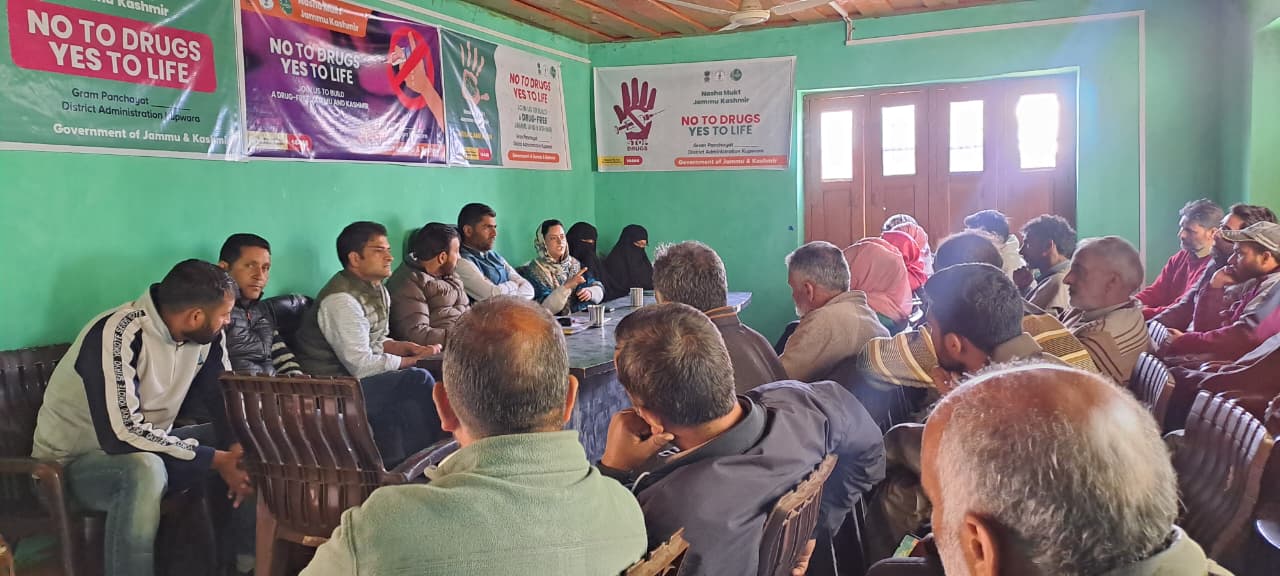
However, what makes this campaign different is that it does not rely solely on strict measures. There is a conscious effort to involve society at every level. Awareness programmes in schools, colleges and villages have opened up conversations that were long avoided. Students are being encouraged to speak, question and understand the dangers. Families are being sensitised to recognise early signs. This shift from silence to dialogue is an important step in tackling the problem at its roots.
Another dimension that deserves attention is the recognition of the wider implications of drug abuse. It is not just a health issue or a matter of individual choice. It has social, economic and even security implications. The linkage between drug networks and larger destabilising forces has been acknowledged, which adds seriousness to the campaign. Addressing this aspect requires coordination among multiple agencies, and the present effort appears to be moving in that direction.
The focus on rehabilitation adds a humane layer to the campaign. Behind every statistic is a life that has been affected, a family that has struggled and a future that stands at risk. Treating addiction only as a crime would be a limited approach. The emphasis on counselling, treatment and long term support shows that the administration understands the complexity of the issue. Helping individuals return to normal life is as important as preventing the spread of drugs.
The response from the public so far suggests that the message is resonating. The involvement seen during rallies, awareness drives and now the padyatra indicates that people are willing to stand up against the menace. This sense of participation is crucial because lasting change cannot be imposed from above. It has to grow from within society.
At the same time, it is important to recognise that this is not a challenge that can be resolved within a fixed timeline. The hundred day campaign may serve as a catalyst, but the effort must continue with the same intensity. Sustained vigilance, consistent policy support and continuous engagement with the youth will be necessary to ensure that the gains made are not lost over time.
The role of institutions also becomes important in this context. Educational bodies, religious platforms and local organisations have the ability to influence thought and behaviour. Their involvement can strengthen the campaign by reaching sections of society that may otherwise remain untouched by official initiatives. A coordinated effort involving these institutions can create a wider and more lasting impact.
In appreciating the ongoing campaign, one must acknowledge that strong governance often requires difficult decisions and sustained effort. The clarity shown by Manoj Sinha in prioritising this issue has provided direction. It has brought the problem out of the shadows and placed it where it belongs, in the centre of public concern and action.
Yet, the ultimate responsibility does not rest with the administration alone. Society has an equally important role to play. Families must remain attentive to the changing behaviour of their children. Teachers must go beyond academic instruction and engage with students as mentors. Community leaders must use their influence to guide and support the youth. Most importantly, there must be a willingness to speak openly about the issue without fear or hesitation.
Drug abuse thrives in silence and neglect. It weakens when confronted with awareness, care and collective resolve. If society chooses to stand firm alongside the administration, the present campaign can achieve far more than its immediate objectives. It can lay the foundation for a healthier and more aware generation.
The road ahead will require patience and persistence, but the direction is clear. With strong leadership, active governance and growing public participation, Jammu and Kashmir has an opportunity to turn this challenge into a story of resilience and recovery.
About the Author
Adv. Tahir Majeed is Author at the Dr. Syama Prasad Mookerjee Research Foundation, a prominent policy think tank dedicated to research, intellectual discourse & public policy advocacy.As the Executive Editor of the North Kashmir Gazette, he actively contributes to policy discussions and strategic insights, aligning with the vision of Viksit Bharat. He can be reached at lawtahirmajeed@gmail.com