Bridging the Future: How Connectivity is Transforming Jammu and Kashmir
These projects aren’t just infrastructure; they’re a promise of a Jammu and Kashmir that’s prosperous and connected. We’re not just building roads and bridges—we’re building a future. With grit and vision, that future’s closer than ever.
Adv. Tahir Majeed
Living in Jammu and Kashmir, I’ve seen firsthand how better roads, railways, and tunnels can change lives. Our valley, with its snow-capped peaks and vibrant culture, has always been a jewel—but its rugged terrain and isolation have held us back for too long. Over the past few years under the leadership of Prime Minister Modi, though, something remarkable has been happening. A wave of infrastructure projects has swept through, from highways cutting through mountains to trains rumbling closer to the Valley. These aren’t just projects; they’re lifelines, pulling us into a future of growth, opportunity, and connection. Connectivity isn’t just about laying asphalt or steel tracks—it’s about stitching a region together. For a place like Jammu and Kashmir, where villages can be cut off by snow or landslides, good infrastructure means kids can get to school, farmers can sell their apples, and tourists can explore our beauty without a second thought. It’s the foundation of progress. When people and goods move freely, businesses thrive, jobs sprout, and communities feel less like islands. That’s the promise driving these efforts, and it’s starting to pay off.
Take the roads, for instance. In places like Kupwara and Gurez, where winters once meant months of isolation, new all-weather roads have opened doors. I’ve talked to locals there who say they can now reach hospitals or markets without waiting for spring. The Srinagar-Baramulla-Uri highway has slashed travel times, letting traders move goods faster and safer. Down in South Kashmir, widened roads are doing the same—farmers in Shopian tell me they’re getting better prices because their produce doesn’t rot on the way to market. The numbers back this up. As of early 2025, the Ministry of Road Transport and Highways reports that 163 of 294 sanctioned road and bridge projects in the region are complete, with an investment of over ₹27 billion ($324 million). The Delhi-Amritsar-Katra Expressway, a 135-kilometer stretch in Jammu and Kashmir, is nearing its finish line. Once done by mid-2025, it’ll shrink the trip from Delhi to Katra—home of the Vaishno Devi shrine—from 10 hours to six. That’s a game-changer for pilgrims and local businesses alike.
Then there’s the railway revolution. The Udhampur-Srinagar-Baramulla Rail Link (USBRL) has been a dream decades in the making, and it’s finally taking shape. In January 2025, Prime Minister Narendra Modi inaugurated the new Jammu Railway Division and flagged off the first direct train to Kashmir, a 62-kilometer stretch from Katra to Sangaldan. This section boasts the Chenab Bridge, the world’s highest railway bridge, soaring 359 meters above the river. I’ve stood near Reasi and watched trains glide over it—it’s a sight that fills you with pride. By late 2025, the full 272-kilometer line is expected to be operational, connecting Kashmir Valley to India’s rail network. The benefits are already trickling in. Tourists who once hesitated at the thought of winding roads are booking tickets to Gulmarg and Pahalgam. Local traders I’ve spoken to are excited about cheaper freight costs—rail is four times more economical than trucks, according to the government. For a region where apples drive the economy, that’s huge.
Tunnels are the unsung heroes here. The Chenani-Nashri Tunnel, opened years ago, was a start, cutting the Jammu-Srinagar trip by hours. But 2025 has brought bigger breakthroughs. The Z-Morh Tunnel, a 6.5-kilometer marvel between Gagangair and Sonamarg, opened in January, ensuring year-round access to Ladakh. I drove through it last month, and the smooth passage—no more avalanche-prone detours—felt like stepping into the future.The Zojila Tunnel, at 13.14 kilometers, is next. As of March 2025, 40% of the work is done, with completion slated for 2027, though some officials hint at an earlier finish. Costing ₹68 billion ($816 million), it’ll link Srinagar to Leh, slashing travel time by 3.5 hours and keeping the route open through brutal winters. Union Minister Nitin Gadkari, who’s been a driving force behind these projects, calls it “Asia’s highest” tunnel—a bold claim, but one that fits its 11,575-foot altitude.
National Highway 44 (NH-44) remains the J&K’s backbone. The four-laning of the Jammu-Srinagar stretch, a ₹160 billion ($1.92 billion) effort, is nearing completion by August 2025. With 10 tunnels spanning 21.5 kilometers, it’s taming the Pir Panjal range. I’ve seen the difference on the Ramban-Banihal section—a new 2.35-kilometer bypass opened in January 2025, easing bottlenecks that once choked traffic. Alternative routes like the Mughal Road and the Srinagar Semi Ring Road are stepping up too. The latter, a ₹29 billion ($348 million) project, is smoothing traffic across five Kashmir districts. These highways aren’t just concrete—they’re corridors for trade, tourism, and even cultural exchange, tying us closer to the rest of India.
Air travel’s getting a boost too. Srinagar’s Sheikh ul-Alam International Airport now handles night landings, and passenger numbers hit a record 2 million in 2024. Plans for new airstrips in remote spots like Kishtwar are in the works, with the government eyeing 2026 for take off. I’ve met tourism operators who say easier flights are bringing more visitors to offbeat destinations. The economic ripple is real—hotels and homestays are popping up faster than ever.
All this building isn’t just about steel and stone—it’s putting people to work. The Z-Morh Tunnel alone employed over 1,500 locals during construction, and the USBRL has created thousands of jobs since it ramped up. Small businesses are sprouting along new routes—tea stalls, repair shops, even adventure tour outfits. In Baramulla, a friend who runs a guesthouse says his bookings doubled since the rail news broke. The government pegs the economic impact at billions, but for families here, it’s about steady pay checks and hope.
Programs like the Pradhan Mantri Gram Sadak Yojana (PMGSY) have built 8,787 kilometres of rural roads since 2019, connecting villages that once felt forgotten. The Bharatmala Pariyojana is pouring ₹299 billion ($3.59 billion) into highways, with four new corridors announced in January 2025—Jammu-Udhampur, Jammu-Chennai-Anantnag, Surankote-Shopian-Baramulla-Uri, and Jammu-Akhnoor-Surankote-Poonch—totalling ₹500 billion ($6 billion). Digital infrastructure’s keeping pace too, with 5G rolling out in Srinagar and Jammu by mid-2025. Standing in Srinagar today, you can feel the shift. The hum of construction, the chatter about new train routes—it’s a region waking up. These projects aren’t just infrastructure; they’re a promise of a Jammu and Kashmir that’s prosperous and connected. We’re not just building roads and bridges—we’re building a future. With grit and vision, that future’s closer than ever.
Advocate Tahir Majeed is a policy analyst from Jammu & Kashmir with expertise in governance and economic development. He is keen on the resurgence of tourism in North Kashmir. As the Content Director of the North Kashmir Gazette, he actively contributes to policy discussions and strategic insights, aligning with the vision of Viksit Bharat.
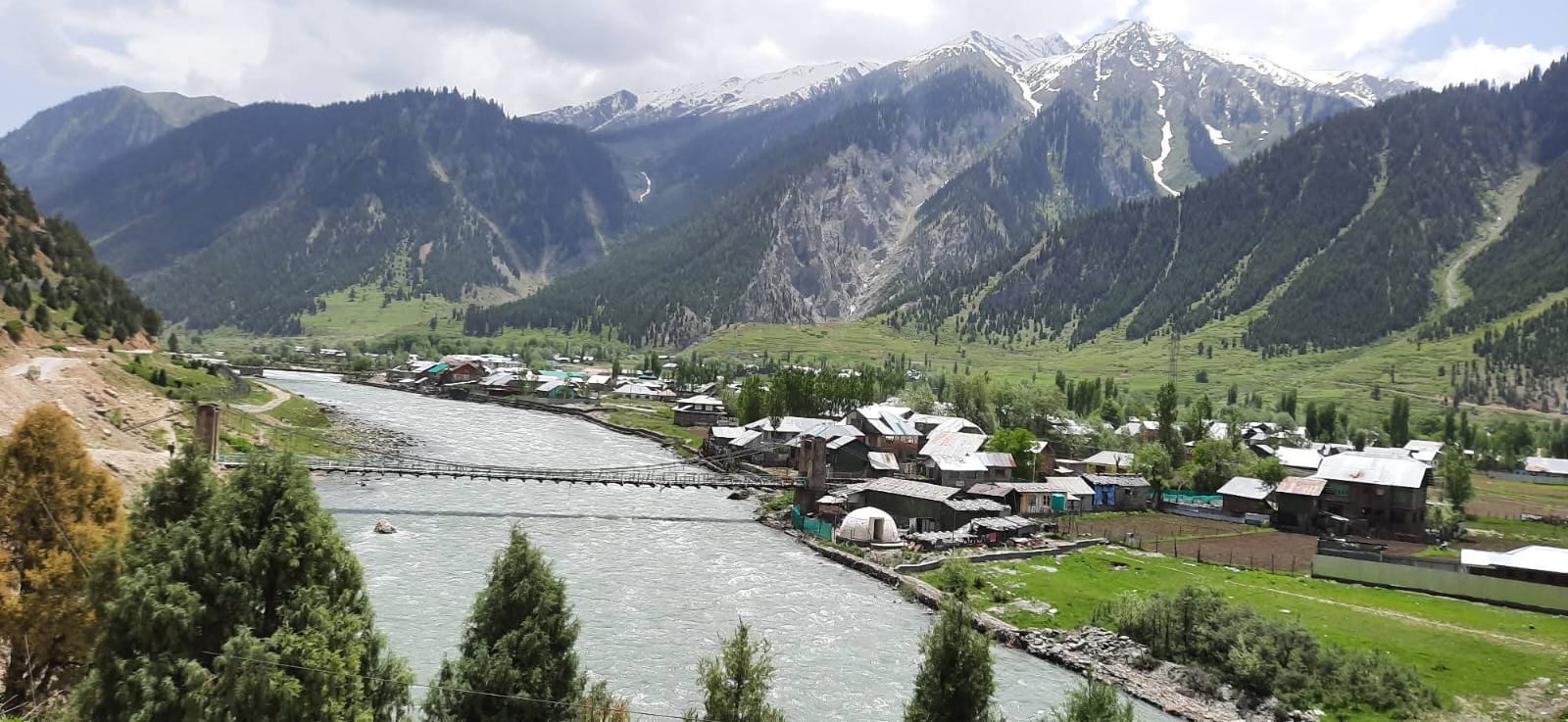
Pic by author: A view of a border Road in District Kupwara